CALCAREA PHOSPHORICA
Matéria Médica
phone_android 021 2239-9827
email contato@letrahomeopatica.com.br


Matéria Médica
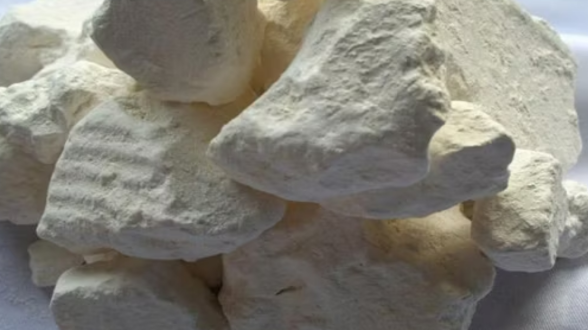
Understanding Calcarea phosphorica
Claudio C. Araujo MD, FFHom (Lon) et al.
Most of the homeopathic knowledge of this remedy - both its actual and former use - came from Schussler book “The twelve tissue remedies”. It became common sense that this remedy has a strong relation with malnutrition, the consequences after a child has suffered from bad nourishment during the first years of ones childhood. And many children were and still are helped based on these conditions. But – could it be possible a child to develop Calc-phos. symptoms and never have been through famine or any kind of nutrition deficiency in one´s first years?
A clinical case many years agohas helped me to understand this remedy: A fine woman in her thirties came for treatment due to intense blood losses during menses. She had a steady job and was very happy with it. She never got married and had no children, being very much focused on her job and her responsibilities. She loved to travel, loving to fly abroad every year for the same city, for a whole month. “There - she said – I go out every evening looking for men to have sex. I travel there every year since I became able to afford for my travels”. She was not embarrassed to tell me about her sexual life or for what kind of living she has decided to embrace, it was just the way she has decided to enjoy her life: no husband, no children, but a job to pay for her expenses and her travels - looking for fun and sex with many men as she could have. She was prescribed Calc-phos. single doses, high potencies in long intervals with a total clearance of her monthly blood losses.
She was from a wealthy family; there was no possible early sufferings from malnutrition during her childhood. We were left with a possible understanding of the case:
There is this symptom: a child rejecting her mother´s milk, that tastes salty and stays at her child´s mouth:
Child refuses breast, milk has a saltish taste; trying it, taste remains long in mouth.
Is the child rejecting her mother or is the mother rejecting her child from feeding her with a saltish taste milk?
The pediatricians heard during our study stated that a child never rejects one´s mother´s milk; thus there´s a given mother producing upon her child an impression that the milk that has been fed has a saltish taste, probably giving to her child a strong sense of rejection, followed by malnutrition. What will become of such child?
Often screaming and grasping with hands; cold sweat in face, body cold; children with open fontanelles.
Peevish and fretful children,
Anxiety of children : in pit of stomach; with bellyache; with chest complaints; with palpitation.
Child will not stand any more, and loses flesh.
Children do not learn to walk, or lose the ability.
Child: convulsive starts, lies on its back.
Violent screaming, grasping with hands in great agony towards its mother, cold sweat most in face, whole body cold.
Epileptic attacks in a young lady of 18, which had existed since she was a child six months old; attacks occurred every three months; spasms all clonic and on l. side, with diarrhœa and loss of consciousness; she falls forward on the face and sleeps afterwards; sometimes she has a second attack the same day; they frequently occur after eating.
Epilepsy; suitable for young persons whose bodies are in progress of development, and for scrofulous subjects.
A child of fifteen months, with a big head and open fontanels, took from a trituration of a drachm, Calc. ph., with half an ounce of milk-sugar, half a teaspoonful, in the evening. Soon violent screaming, grasping with hands in great agony, towards his mother; cold sweat, most in face; whole body cold; lasted nearly two hours; next day, as well as usual; 6 P.M., another spell, lasting only fifteen minutes. Mother did not give another dose. Sooner than expected the fontanel close.
Anxiety of children; in pit of stomach; with bellyache; with chest complaints; with palpitation.
Convulsions of children; but the remedy must be given when not in the convulsion to secure the best effect.
Feeble minded children.
The child grasps the head with the hands and screams.
The mental state of Calc. ph. is one of weakness: weak memory; inability for mental exertion. Hence it is appropriate in effects of mental strain, such as school headaches in children, weak-minded children.
A schoolboy to whom I was giving Calc. ph. developed these new symptoms: "Tongue thickly coated white, taste pasty; felt absolutely silly; taking coffee whilst playing a game, he put the sugar on the draught-board instead of into the cup, and didn't know he had done anything foolish."
Grauvogl considered it the most important remedy in chronic hydrocephalus, and he very properly gave it as a prenatal remedy during pregnancy to women who had previously borne hydrocephalic children.
It´s not present in the proving, but like my patient: Is the calc-p. patient unable to have any feelings for a family, for sons and daughters?
The sexual symptoms from the proving are present in this patient:
Nymphomania ; all organs in erection, with insatiable desire, particularly before catamenia.
Voluptuous feeling as if all female parts were filling up with blood; she feels pulse in all parts, with increased sexual desire.
Clitoris erect after urination, with sexual desire.
Pressing in uterus, increased sexual desire, aching in neck of bladder, prostration.
The Calc-phos. patient may bring to his/her doctor many symptoms related to one´s intellectual capacities:
The mind shows above all a tired and weak brain.
Feeble memory, and inability to sustain mental effort.
Suffering in the head from mental exertion.
Dreads mental exertion.
Sluggish mind.
Imbecility.
Thinking of complaints causes them to appear or increase. Extremely fretful.
The mental state of Calc. ph. is one of weakness: weak memory; inability for mental exertion. Hence it is appropriate in effects of mental strain, such as school headaches in children, weak-minded children. In this it is like Nat. m.
The Calc-phos feelings for the others, brought up by the proving, may tell us about this patient´s affections for humankind:
Likes to be alone.
She seeks solitude to commune with her thoughts and to shun the exertion of society.
Ailments from grief, disappointed love.
After vexation depressed ; cannot work, walks as if lame ; looseness of bowels.
indignation rises in him, and he would like to avoid the conversation.
A communication in which some one is justly reproached concerning his conduct, affects him very disagreeably; he grows violent, and holds up his faults to himself.
This is our calc-phos patient: averse to company, seeking solitude, broken hearted, suffering from intellectual and memory weakness and on the move, travelling and carrying inside an uncontrollable sexual desire. Our hypothesis is that all these sufferings may have a possible start: the impression of her mother´s love absence, the sensation of not being loved since the early beginnings of the one´s life. Why is this child rejecting one´s mother´s milk? What should be the impression this child has felt, coming from one´s mother? The text describes a mother that bare several children, all of them with open fontanels. What may be the connection between this woman and her children?